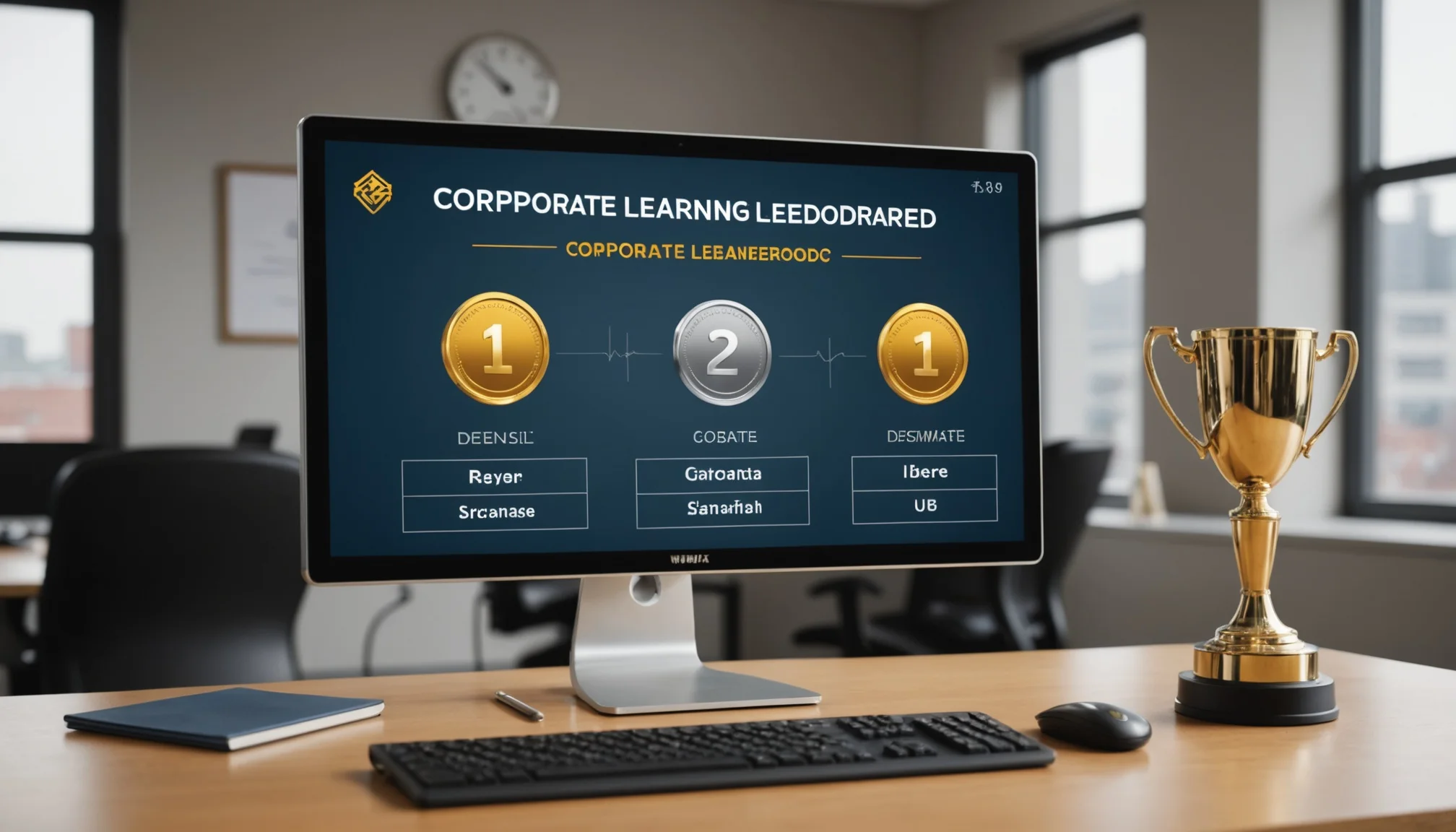
Leaderboards are probably the most debated feature in learning gamification. The critics — and there are credible ones — argue that public ranking creates anxiety in lower-ranked employees, discourages the people who most need encouragement to engage, and introduces unhealthy competition into what should be a collaborative environment.
The proponents argue that social comparison is one of the most powerful motivational mechanisms available, that humans have always competed for status in every domain, and that the completion data on gamified vs. non-gamified platforms makes the case without any need for academic debate.
Both sides have something right. The evidence from deployments across 200+ organizations suggests the answer is more specific than either camp typically acknowledges: leaderboards work when designed correctly, and fail in predictable ways when designed incorrectly. The design decisions matter enormously.
The Research on Social Comparison
Social comparison theory — the idea that people evaluate themselves relative to others in their reference group — is one of the most robust findings in social psychology. People compare themselves upward (to those doing better) and downward (to those doing worse) for different motivational reasons, and the directionality and framing of the comparison significantly affects the outcome.
In learning contexts, upward comparison — seeing someone slightly above you on a leaderboard — tends to be motivating when the gap feels achievable. Seeing the top of a list that puts you in the bottom quartile is demotivating because the gap feels insurmountable. This is the mechanism behind the primary leaderboard criticism, and it's real.
But the same research shows that peer-group comparison — comparing yourself to your closest competitors rather than the full population — consistently motivates without the same demotivating effect. If your rank shows your position within your team of eight rather than within a company of 500, the gap always feels achievable, the competition feels personal, and the social stakes are higher because these are people you work with every day.
What the Deployment Data Shows
Across Learn.xyz's customer base, the leaderboard adoption data shows clear patterns.
Company-wide leaderboards (showing all employees ranked company-wide): average 23% higher participation among top-quartile performers, negligible to slightly negative effect on bottom-quartile participation. The rich get richer — people already engaged engage more. People at the bottom don't engage more, and some disengage further.
Team-level leaderboards (ranked within direct team, 6-12 people): average 31% higher participation across all performance quartiles, including the bottom. The effect is most pronounced in the third quartile — moderate performers who weren't engaging become much more active when competing against a peer group where they can realistically rank in the top half.
Anonymous leaderboards (your rank shown, but names hidden): smallest effect of all formats. Anonymity removes the social pressure that drives most of the motivation. If nobody knows it's you in 8th place, there's less urgency to climb.
The takeaway is unambiguous: leaderboard scope determines the motivational effect. Team-level beats company-level, which beats anonymous. The critics of leaderboards are largely critiquing company-wide formats — a legitimate concern for a specific design choice, not a critique of leaderboards as a mechanism.
The Competitive Personality Variable
Some people are inherently more competitive than others. This isn't a controversial claim. The question for L&D design is whether leaderboards impose competitive framing on people who don't want it, creating a negative experience that reduces engagement rather than increasing it.
The honest answer from the data is: for a small minority of employees, yes. In every deployment, there are participants who report that leaderboards increase anxiety and make learning feel more stressful. That minority is typically 5-10% of the learner population, and their completion rates in non-gamified contexts are rarely meaningfully better than in gamified ones — they're consistently lower-engagement learners regardless of format.
The practical response isn't to remove leaderboards for everyone. It's to give learners the ability to opt out of leaderboard visibility while retaining access to all other gamification features. Most platforms that offer this opt-out find that fewer than 10% of users exercise it — and the remaining 90%+ benefit from the engagement lift.
Leaderboards and Different Learning Objectives
The context in which a leaderboard is used matters as much as its design. For compliance training where the primary goal is completion, leaderboards that rank by completions are straightforwardly effective — they create social pressure to finish what everyone else is finishing, without introducing any negative competitive dynamic around the content quality.
For skill development training where the goal is genuine mastery, leaderboards ranked by assessment performance introduce a more complex dynamic. Employees who perform poorly on assessments are publicly ranked below their peers, which can create shame around skill gaps that you actually want them to acknowledge and work on. In these contexts, ranking by effort (time spent, modules attempted, quizzes retaken) rather than performance is often more effective for maintaining broad engagement.
For voluntary professional development, leaderboards by XP or activity level create the peer visibility that encourages participation without the performance comparison pressure that discourages lower-skilled learners from engaging with content they need most.
Implementation Recommendations
The evidence supports a clear set of design principles. Scope your leaderboards to the team level, not the company level. Show learners their position among a peer group of 6-15 rather than among hundreds. Allow opt-out without reducing access to other gamification features. Match the leaderboard metric to the learning objective: completion for compliance, activity for development, performance for certification. Reset leaderboards periodically — monthly or quarterly — to prevent permanent top-ranker stagnation that discourages challengers.
Leaderboards aren't magic and they're not poison. They're a tool with a specific mechanism: social comparison and status motivation. Design them to leverage that mechanism well, and they consistently move the metrics that matter. Design them thoughtlessly — or let the debate about their theoretical harm prevent any use at all — and you leave one of L&D's most reliable engagement tools on the table.
Smart leaderboards. Not just ranked lists.
Learn.xyz lets you configure team-level leaderboards, opt-outs, and custom metrics so every competitive element is designed to drive the right behavior.
Get a Demo